Showing posts with label home-schooling. Show all posts

Those Little Extras for Teaching Your Child to Read With "100 Easy Lessons"


One of the most popular items in our store has been the downloadable packets (free and otherwise) that are filled with supplemental activities that work hand in glove with the amazing Distar Reading Program, "Teach Your Child to Read in 100 Easy Lessons".


I used this reading program in my traditional classroom when I taught reading, but since the program is designed for a parent and child to sit down together one on one, I had to modify it quite a bit.  I created quite a few supplemental worksheets and printables at the time, that would work for the classroom experience.


And now that I have begun using this program with my own children, I find that those supplemental worksheets are a lot of help.  So I have been developing more and uploading these to my store, in bite-sized segments.  At this time, we are all the way up to Lesson 50, and offer our packets as a Bundle for cost-saving. 


I have had many requests to create supplements for the entire 100 lessons.  I'm working on it! 

Here's what we have so far:


 This was our first experimental packet, following up the great reception to the freebies we put up.  Now if you are familiar with the "Teach Your Child to Read in 100 Easy Lessons", you will remember that by the end of lesson 5, there are only 4 sounds to work with:  a, m, long e, and s.

So the worksheets and crafts in this packet are based only on those sounds.  We included a Dot to Dot activity and crafts to keep it fun, but also really helpful are the Writing Practice Sheets that have the paths of motion already included for children that are just being introduced to these letters/sounds.

We call this one "After Five Phonics".  


Keeping the Covers of the packets pretty similar, but with different color schemes, our next release was "After Ten", intended of course, to be utilized after you and your child have completed Lesson 10 in the Distar Program.  At the completion of Lesson 10, children will have been introduced to two more sounds:  r, and t.


Now, very simple words can be formed, and so I tried to get creative with these and make worksheets that would echo the instruction that is received in the program.  In addition to the craft pages and the writing practice sheets, I added a "Finding the Sounds" Activity, utilizing shapes and a "What Do You See?" page where children can illustrate a short sentence that they have read.

This, of course, is "After Ten Phonics".


By this time, I was starting to receive some great feedback, including the news that a 2nd grade Special Ed teacher was utilizing these new worksheets and so I decided to try my hand at a few other new kinds of activities in the next packet, "After Fifteen".

The sounds introduced between Lesson 10 and Lesson 15 are d and the short i sound.

So after creating all the activities I now considered standard for the packets, I also created an "Identifying the Sounds" worksheet and an "Identifying Words" worksheet, so that children could work with newly acquired sounds by connecting the sounds to the pictures represented. 


Now I was having people contact me via my website to ask when and if I would have the other packets completed soon.  This was exciting and also helped me to keep the creative juices going.

After Lesson Twenty, the new sounds include:  th and

"After Twenty" also included another new activity, a Story Time Page, where children can practice their reading comprehension of a very simple story.
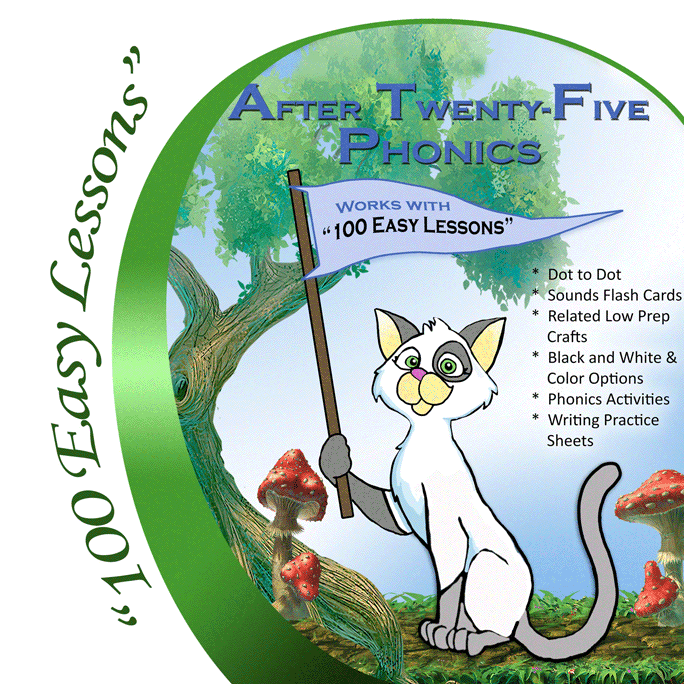


Then, came "After Twenty-Five".  Along with the crafts, and the other activities that have already been listed, I added something new to this packet.

The new addition is something I have been wanting to do, when enough of the sounds were there.  After Lesson 25 in the Distar program, children have been introduced to sounds o, n, and f.


With these sounds added to the repertoire, there are now enough sounds to create a Mini Book, that children may read, color, and then take home to share their skills with their parents.


The Mini Book is intended to be cropped to the size of the outer black rectangle, folded into a 1/4 sized paper book, and then read, and colored, if desired.


As we have expanded our packets, the supplements we have created have modified and expanded as well.  We now offer multi-sensory pages for each sound in the first 50 packets. 


  These Multi-sensory pages are not only able to be used for children to find and circle the images that begin with the sound that is pictured, but they can also use manipulatives to fill in the sound.


For instance, this nice big S sound could be used to fill in with string or small stones.  Children have the opportunity to create the letter using manipulatives like these. 


We have also revamped some of our Craft pages, to ensure that children can learn more about the new sounds they are learning through easy, crafts that help explore vocabulary with delightful experiences. 


We can't wait for you to dive in and learn more about these awesome supplements! 


Come visit our store, and look them over in detail. 

Introducing Letter H


This was one of those days, where we went about everything in random order and yet it all still worked somehow.  Which is encouraging.

Here's how it went.  I'm working away on the computer, completing a Dot to Dot for the letter W, when there is a little hand on my knee and a little voice says, "I want a Dot to Dot."

What's a mom to do, but print out that H Dot to Dot page, even though we haven't introduced H yet?

Teaching Tip:  Child-Led learning is the best learning there is.  Don't miss that opportunity when your little one expresses their interest, even if it doesn't quite fit with your schedule or plan. 


She called this one her Winnie the Pooh house, before she had even started drawing on the numbers.  I think the windows give it away.  The finished product looks like this:

Yep.  Looks like a Winnie the Pooh house to me!  So, here is where we began.  And then we went back and filled in the pieces.

Little Miss is very familiar with Glimmercat these days.  She refers to the kitty character as "my Glimmercat" in the same way that she refers to Hello Kitty toys as "My No-Kitty".  So, we pulled out our Glimmercat Song for H because it is fun and my son sang it along with us.


Like all the letter sounds, even though I write out the "H" sound as "huh", we keep it short and poppy so it is more of the sound than the word "huh".  This helps later when they move into learning to read with sounds.

Then, I printed out the Path of Motion for H.  I always print out the black and white version, even though the color one looks so nice, because Little Miss loves to color her Glimmercat.


Now, we went over the Big H and the little h a couple of times with our fingers, and she wanted a marker.  I assumed she just wanted to color, but I look over, and there she is, writing in the Big H, practicing how to write it!  Yay, Little Miss!


Then she colored in more with her trusty pink marker.  It was a backwards sort of introduction to the letter H, but you know what?  It worked!  And that is what matters.

For the letter of the week packet that includes all the printable worksheets seen here, you can visit my store:  https://www.teacherspayteachers.com/Product/Letter-of-the-Week-H-2012622

The Best Reading Program EVER


Back when I was teaching I had this amazing reading program.  It's called "Teach Your Child How To Read in 100 Easy Lessons", and if you've even started searching around to find a home-schooling reading program you have probably heard of it.  This program is intended to be taught by a parent to their child, all cuddled up on the couch together.  I checked it out and fell in love, so when I had my first classroom, I decided to modify it for teaching to a group.  The only problem is there are not a lot of supplemental worksheets and reading tools out there for this program, so I ended up creating my own.

One of the best ways to do this was to send flash cards home to the parents of my beginning readers so that they could practice their sounds with mom and dad at home.   Back in the day, mine weren't so colorful and pretty.  I revamped them for a refreshed look. 


Another way was to create my own phonics activity worksheets that went along with the beginning sounds, so that my classroom kids would have a chance to interact with the new sounds they were learning in a variety of ways.


Now that I have children of my own, I have gone back and refreshed the very curriculum I used in my classroom for my kids to use.  This sheet above was one of the very first activities that my son and I did together when we started working on his reading together.  (One of the reasons I love this reading program is because it introduces children to very simple words that they can read in the first few lessons).


Practicing writing their sounds is a key component to this program, which uses a non standard style of font as it first teaches sounds to children.  These worksheets I created are great for this practice!


Since my son and I are working on this curriculum these days, it just seemed to make sense to make it available for others to use as well.  So, with my young son testing it out for me, we have put together a phonics printable packet that is now available on the Teacherspayteachers website. 

Here's the link:  Teach Your Child to Read Supplemental Packets.
