Showing posts with label kindergarten. Show all posts

Unlocking the Secrets of Phonetics: A Comprehensive Review of 'Teach Your Child to Read in 100 Easy Lessons'


 (Note: This blog post is inspired by a video transcript from a homeschooling parent sharing her experience using a specific reading curriculum. For more detailed insights, please refer to the original video above.)

A Deep Dive into "Teach Your Child to Read in 100 Easy Lessons"


Greetings, fellow parents, educators, and readers! Today we will journey into the realm of reading curricula, focusing on the much-hyped program "Teach Your Child to Read in 100 Easy Lessons." Through this blog post, we'll dissect the program's techniques, its merits, and possible downsides, alongside a candid reflection from a child who has nearly completed the course.

The decision to adopt this curriculum came from a quest to enhance my child's reading skills, which seemed to lag during her kindergarten year in public school. Influenced by the Distar method's reputation and the persuasive video by Akiba Maze, I decided to give this program a shot.

The Distar Method: An Overview


The Distar method, prominently used in this curriculum, emphasizes phonetics to teach reading. The initial lessons introduce new sounds gradually, allowing children to explore these sounds' nuances. The lessons intricately interweave tasks, creating a dynamic and engaging learning space.

One distinguishing element is the use of visual aids, like arrows and balls, which help children identify sounds and sound blends. As the lessons progress, the complexity increases, merging sounds into one united sound, denoted by a single ball. The program also incorporates rhyming, dictation, and letter formulation—further enriching the learning experience.

For novice homeschoolers, the program's scripted lessons are a blessing. The structure offers guidance on navigating the journey and providing the child with the necessary support. The curriculum also employs a unique spelling method, complete with a pronunciation guide. While this approach can be beneficial while reading the stories within the program, its necessity beyond that is debatable.


Pros of "Teach Your Child to Read in 100 Easy Lessons"

The effectiveness of the Distar method in teaching phonetic reading is a significant pro of this program. The structure of the lessons, the gradual introduction of sounds, the visual aids, and the use of rhymes, dictation, and letter formulation all contribute to a child's understanding and absorption of the sounds of words.

The program is also very beginner-friendly, offering a clear script to guide the educator throughout the process. For parents who are new to homeschooling, this structure can be a lifesaver. Furthermore, the distinct method of spelling and the pronunciation guide can be advantageous while reading the stories in the program.

Cons of "Teach Your Child to Read in 100 Easy Lessons"

Despite its merits, the program isn't without its drawbacks. Notably, the book feels outdated, with antiquated stories and illustrations. The lack of ethnic and racial representation in the images is a significant concern, especially for families who value diversity in their teaching materials.

The unique spelling and pronunciation guide, while helpful within the program, might create a gap when children encounter conventional phonetic blends in other books. The program's somewhat exclusive nature might limit a child's reading exposure during their learning journey.

Moreover, the way sight words are handled in the curriculum may pose a potential stumbling block. Sight words often defy standard phonetic rules, so introducing them as distinct and different may be more beneficial.

The Child’s Perspective

When considering any educational program, it's crucial to understand the child's perspective. In my child's case, she found the program initially exciting but gradually lost interest as the stories became longer and more complex. While the curriculum was effective in teaching her to decode text, it didn't seem to spark curiosity or foster a love for reading.

Concluding Thoughts

"Teach Your Child to Read in 100 Easy Lessons" is undoubtedly effective in certain respects. It provides a clear, structured path to phonetic reading and offers useful tools to help children understand the sounds of words. However, this program's effectiveness may be limited in fostering a broader love of reading and curiosity in children.

This limitation is particularly noticeable as the lessons become more complicated. The unique spelling system and emphasis on phonetics can be helpful in the context of the program. Still, they may cause difficulties when children try to apply these skills to other texts, indicating a need for a more inclusive approach to reading.

Moreover, the program's outdated nature, both in terms of story content and illustrations, is a major drawback. The lack of racial and ethnic representation may not align with many families' values and educational goals. The handling of sight words in the curriculum, too, could lead to challenges for children as they encounter these words in other contexts.

Despite these issues, it's essential to remember that every child's learning journey is unique. For some children, this program might offer just the right structure and focus on phonetics to help them master reading. For others, it might fall short in engaging their interest or accommodating their learning style.

So, is "Teach Your Child to Read in 100 Easy Lessons" worth the hype? It depends. It has proven useful for many children and parents, particularly in its structured, phonetic approach to reading. Yet, its limitations suggest that it may not be the best fit for everyone.

When choosing a reading curriculum, consider your primary goals for your child's reading education. If you're looking for a structured, phonetic-based program and don't mind supplementing it with additional materials, this program might serve you well. However, if you're aiming to foster a love of reading and a sense of curiosity in your child, you may want to explore other options.

Ultimately, the best reading program for your child is one that fits their learning style, holds their interest, and nurtures their love of reading. Whether that's "Teach Your Child to Read in 100 Easy Lessons" or another program entirely is a decision only you can make.

Thank you for joining me on this deep dive into "Teach Your Child to Read in 100 Easy Lessons". I hope this has given you some valuable insights to help you make informed decisions about your child's reading education. Remember, no matter what path you choose, the most important thing is to create a supportive, engaging, and fun learning environment that helps your child fall in love with reading. Happy reading!

"After Five" Through "After One Hundred" Phonics 

All-in-One Bundle 
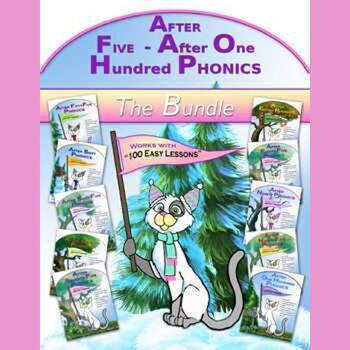

Are you ready to take your child's reading journey to the next level? Our "After Five" Through "After One Hundred" Phonics All-in-One Bundle is the perfect companion to the "Teach Your Child to Read in 100 Easy Lessons" curriculum.

This comprehensive bundle is packed with phonics activities, flashcards, and crafts that align with each lesson from 1 to 100. Plus, we've included writing practice sheets to reinforce the sounds your child is learning. And the best part? Everything is available in both color and black and white.

We understand that repetition is key for young learners, and while "Teach Your Child to Read" has built-in repetition, our bundle offers even more opportunities for practice. But it's not just about repetition - it's about making learning fun and engaging. Our crafts and hands-on activities bring each lesson to life, keeping your child excited and motivated.

Don't just take our word for it. One of our customers said, "Love these printables. It was the main thing that made this program doable for us. My son really struggled with the book and was bored with it quickly, but he tolerated it when he got to do these lessons afterwards."

So, are you ready to enhance your child's reading experience? Click the link below to purchase the "After Five" Through "After One Hundred" Phonics All-in-One Bundle today. Let's make reading fun, engaging, and successful for your child!


Butterflies, Bats, Buses and Bears! Crafts for Letter B


Sometimes, you just want to pull out an easy craft to round out that Kindergarten lesson.  Or, maybe you read one of my favorite Mo Willem's children books, "Don't Let the Pigeon Ride the Bus"...


And you were wishing you had one craft more to help make those little ones relate that much more with the pigeon.  I mean who doesn't wish they could drive a bus once, right?


We love this latest packet of our Letter B crafts and we can always come up with suggestions for how to use them, even if you don't need to teach the Letter B anytime soon!

For instance, let's say it's getting close to Halloween and you need a friendly Bat for kids to create...Voila! we have that for you.  Look how cute he is!


Or, it's Spring semester : time to teach about the life cycle of the butterfly, and you'd like to have your kids color in their own butterfly wings on a butterfly craft, but drawing them out sounds a little challenging.


We have you covered!

Since for several years I worked in the public sector as a Children's Librarian, I can't imagine these crafts without a good Children's Book read-aloud to go along with it.   So I've also created, a book list of recommended titles that includes some great stories that are perfect for reading out loud to little ones.


Hopefully, some of these books will be new ones to add to your own library.  Personally, I think you can never have enough good books.


We try to make sure that all of our crafts are doable by little hands and each one has been kid tested and approved.  This more challenging bus craft, shown above, might require a little assistance when it comes to taping it together, but what better way to practice all those excellent hand-eye coordinating skills then letting your students try?

We also make sure that all of our crafts have their black and white counterparts, so you will find a version that can be hand-colored in each of the crafts in our packets. 


Perfect for your Reading Literacy activities after a good bear story, our Bear Craft is a simple cut and paste.


And each craft has a spot for writing student names, so that these precious completed projects will make it home in the backpack they were intended for!

Check out more of our Craft Products in our Store!


You can find our printable B Crafts Packet ready to be purchased and downloaded today!

Apples, Astronauts, Ants and Alligators! Crafts for Letter A


There is no doubt about it:  crafts are an undervalued part of the education process for young children.  And yet SO important!  Those little hands still need opportunities for hand-eye coordination and those little minds delight so much in the ability to create things.  Using a craft to connect the dots between a letter/sound or a read-aloud story, take that learning to another level.  So while the temptation is to put craft-making on the shelf, I'm trying to remember that it is an all important facet of the daily process. 


Our latest Craft Packet tries to keep in mind the types of crafts that can be most easily implemented in the classroom, as well as keep them fun and entertaining for children.  Not too difficult, but still challenging those little hands with using scissors, and working in letters when appropriate. 

Above, in our Ant Craft, we use the Letter A to make the Ant's lower set of legs.  Children draw in the letter A before gluing on pom-poms to form the body.  It's a perfect follow-up to learning the song, "The Ant's Go Marching":


 ...or reading a favorite children's book about Ants. 

In fact, here's my recommended children's book list for letter A, perfect for reading out loud and perfect for introducing apples, astronauts, ants and alligators to little ones!


Our Alligator Craft will challenge those small hands with extra cutting, but it is a very rewarding finished product to little people who still see paper creatures as a kind of new toy. 


We love pairing this guy up with the story "Hooray for Amanda and her Alligator" by Mo Willems (see our Book list above). 


Apple crafts are a dime a dozen, but we suggest having students poke a little hole in their apple that their finger can stick through.  A little happy face drawn onto their "worm" finger will make their face light up with smiles. 

One of our favorite science videos is "Cat in the Hat:  Space is the Place".  


 There's no better way to follow up Nick and Sally meeting an Astronaut then to let children put themselves in space with the awesome photo craft. 

All of our crafts are also available in black and white, so if you want them to practice coloring their crafts to make them truly their own, that possibility is there:


Feel free to look at our Letter A Craft Packet in more detail in our Store.  This is a printable packet, requiring glue, tape, scissors, printing ability, and little else.  You can check it out here today.


Ideas for Your Morning Calendar in Your Kindergarten Classroom


Morning Calendar is one of the most fun times in the classroom, isn't it?  Especially, when you keep it interactive.  Anytime children get the chance to be a part of the action, they have a blast and the learning skyrockets.

Just because I'm now homeschooling rather than teaching in a traditional classroom, does not mean I want my kids (or me) to miss out on this fun!  But...we have a small space.  Our open kitchen and living room with a built-in computer desk, is our classroom.  I've limited myself to one wall of that area (ONE!) for our educational bulletin board.  So, come into my house, and take a close peek at how we use our wall space, fit in our Morning Calendar, listen to some of our Morning Songs, and take a peek at some freebie links to Morning Calendar follow-up ideas.


Because our area is limited, I have to make strategic decisions about what I find the most necessary items to include for my kids' ages and abilities.  I have one in preschool, one in Kindergarten and one in 2nd grade.  This means one of my first priorities is our Alphabet Cards.


Our Alphabet Cards are colorful, but my favorite thing about them is the way they are designed as if they are on a piece of ground.  Letters resting on ground is a helpful way to show explain to kids how some of lowercase letters go "underground", (or under the mid-line) as they do when they are written.


The pictures also show an image that is helpful in remembering the sound that is displayed.  For instance the "P" here makes a sound like popcorn popping, and our cat character (Glimmercat) is cooking up some popcorn in the shadow of Letter P.


If you're teaching in a classroom setting, a "Morning Song" is a great way to let kids know it is time to gather around for Calendar Time.  YouTube's "Super Simple Songs" has a repertoire of Morning Songs that are great for this use.  Here's an example:


When I taught in the traditional classroom setting, I had a variety of morning songs I pulled from.  Students knew that by the time the song ended, they were expected to be sitting in their places, ready to go.  It was a fabulous way to get their routines started for the day.  


My actual bulletin board is 22" x 34".  That's a SMALL bulletin board.  And the first thing I needed to go up on that bulletin board was our Calendar.  I use our monthly Calendar for teaching patterns and going over our numbers, daily.  Repetition being so helpful for little ones, this is recommended, and teaching them numbers and patterns in conjunction with "Today's date", makes it all very relevant to children.


This Calendar is designed to be interactive for children.  Some of the interactions are daily, and some will move seasonally or monthly.  For instance, my daughter was able to easily turn the arrow that pins into an image of a sun when we rolled over into September.


Likewise, she will only turn the seasonal arrow again when we move into Fall.   This way she will learn that the months and seasons are like a rotating wheel, directed by our own sun.  But let's look closer at the items she gets to interact with daily.


First, she daily changes the days on our "Day of the Week Rainbow".  A VERY fun song to accompany this rainbow to help learn the days, is seen here, posted by KidsTV123:


How perfect is that?

My five year old considers herself quite the pro at both of these already, and she loves the ownership of being able to change them herself.  


I decided to create a great many numbers in varying colors so that I can create my own patterns for her.  In fact, there is no end to patterns I can create and the complexity can increase as we go. 


This set (Numbers and Tags, Set 1) is available in our store.  I've been having quite the Bohemian design spree recently, so after completing this set, I went ahead and designed a second one, because when jumping into Boho styles, you simply can't have enough variety of color and patterns!


So, now I get to show off our other set, (Numbers and Tags, Set 2), which is also up and available.


The last thing I want to share today is another freebie.  After completing the Calendar together, send your students back to their desk with an opportunity to try out their skills on their own:

               You can download this FREE Daily Calendar Journal, right here in our store.

And if you have songs or additional fun Calendar Activities you'd like to share, please do so in the comments!  We love trying out new things!

Ox-Cart Man Reading Literacy Activity


  There is no better way to introduce simple economics to Kindergarten than by using the wonderful story, "Ox-Cart Man" by Donald Hall. 

     It never ceases to amaze me how fascinated children become by this simple story, where a New England farmer from the early 1800's, travels to market with the various items he and his family have created or grown throughout the year, sells them, and then purchases items to take back home. 


  I really wanted to make some activities that would help my kids to play-act this story, because I consistently find that allowing them to play out what they have heard is allowing their learning to sink in at a whole new level. 


And I am pretty excited by the final results, because these activities were fun, applicable and perfect for Reading Literacy Circles or a homeschooling lesson. 

First, let's look at the "Buying Like the Ox-Cart Man" Activity


   I decided to have my son and daughter work as a pair for this one, and gave each of them four Shillings to cut out from the bottom half of the Activity Sheet.

Then, I walked them both through the items that they could purchase on the top half of the Activity Sheet.  I explained they would get to make purchases with eight shillings each.  Since we just read Ox-Cart Man, they listened intently and carefully considered their options. 


My daughter chose to buy a baby ox for her first purchase.  My son chose a chicken and bucket and tap for his. 


They had so much fun taking turns to be the buyer and the seller of these items and even my young Kinder could easily do the math of counting out her shillings. 

They weren't even ready to end their play-fun and move on to the craft!  Until they saw what it was...


Once again, I decided to let them share the work because this is a LOT of cutting for small kids, and children unfamiliar with using scissors are going to need some help. 


The finished craft page creates an ox-cart, an ox, a sack of potatoes, a sack of wool, a broom and a pair of mittens. 

If you are homeschooling, I'd recommend taking it a step further and asking children what other items they can come up with to take to market in their cart to sell.  My daughter found a blanket and a duck in her toy box and brought these down to add to her wares.


My son took the initiative to cut up some Q-tips to make "candles", just like the Ox-Cart Man had in the story.


The final activity in the packet is the Beginning Sentences Worksheet, really excellent for taking it to another level with your older kids.  I encouraged my son to consider the differences between "Needs" and "Wants" and then he drew a picture (again, from the items displayed) of each in the indicated boxes.


Final step was finishing the sentence by writing down the items he chose.  I find this step excellent when discussing beginning economics with kids, because differentiating between "needs" and "wants" is an important facet of economics which we, as a wealthier nation, often have the luxury of
ignoring.  But in third world nations or in the 1800's, this was a step that definitely had to be considered.


To purchase this Reading Packet for "Ox-Cart Man", head over to my store.   But in the comments, I'd love to hear additional ideas for this story or additional ideas for teaching economics in the Kindergarten class.  Thanks for reading!


A Reading Literacy Activity for The Quiltmaker's Gift


We all have our favorites:  you know the ones:  those picture books that are so heart-rendingly beautiful that you almost have to read it with a tissue tucked into a hand because you know you're going to cry at that one page.

"Guess How Much I love You" by Sam McBratney...


"Love You Forever" by Robert Munsch...


"Knuffle Bunny Free" by Mo Willems...


Did I hit one of your favorites there?

Well, I want to introduce you to another tear-jerker children's book that has an incredible message, unforgettable pictures and...I ugly-cried through the entire last half of it the first (and maybe second) time I read it.

"The Quilt-maker's Gift" by Jeff Brumbeau.


I stumbled upon this book when I was trying to find "Q" books to read to my oldest when we were going through Letter of the Week curriculum.  And I fell in love with it.


And now it is one of our family classics, and one of my son's favorite children's books.  So, what's the story about?


The story introduces us to a mysterious Quilt-maker who lives on a mountain top and makes incredibly beautiful quilts.  So lovely are the quilts that many come from far and near to buy them but she will not sell one.  Rather, she slips into the city at night and finds the poor and homeless and wraps them up in one of her lovely quilts.


Finally, the wealthy king hears about the Quilt-maker and is offended that she has never given him one of her priceless quilts so although he has almost everything already, he comes with a thousand soldiers to take one for himself.  The Quilt-maker announces she will only give him a quilt if he gives away everything he owns.  Angered, the King attempts to take a quilt anyway, but magically, it whisks out of the window and away.


The King attempts to punish the Quilt-maker, yet every time he feels remorse and goes to intervene, only to find each time that she has already been saved through her own kindnesses to others.


Finally, the king agrees to give everything he owns away, for the sake of a quilt, and this is where I usually start bawling my eyes out.  But why don't you just listen in for yourself to this read aloud of the Quilt-maker's Gift:


  Now, having fallen in love with this story, I wanted to create some sort of literacy activity for my children to do.  We know that quilt-making can be an incredible classroom project, for one thing.  Just take a peek at this lovely group of ideas on a blog from Rainbows within Reach.

But I also decided to create a few activities for kids to do individually at literacy centers or for young home-schooled children to do, after reading the story.

First, I read up on easy quilt patterns and found one called "The Friendship Star".


Children choose two colors to fill in their patterns with, and then simply color in the quilt pieces.


The end result is a beautiful example of how simple geometric shapes that are repeated over and over can create the beautiful finished quilt design.


Our craft project involves creating a paper quilt from a printout and it is a simple cut and paste project.  The fabric swatch images are reproductions of material designs from the 1800's when quilts were having their hey-day, but you can also print them out as black and white images for children to color themselves in brighter cheery colors.


We also tried this craft, by using actual fabric swatches that we mod-podged (Elmer's glue would work fine, too) to the paper.


This was another great way to recreate a quilt, but I would recommend cutting the fabric swatches ahead of time in advance and not attempting to have children do the cutting.  Fabric can be so... squirrely... to cut!

You can check out our Reading Literacy activity for The Quiltmaker's Gift in our store, or look over our preview for the packet, in more detail right here:


"The Quiltmaker's Gift" is such a beautiful story of generosity and kindness, that there are many additional ideas that could be implemented for students to practice giving on their own.

What are some ideas that you could see yourself doing in a classroom setting or one on one?  I'd love for you to share additional ideas in the comments below!
